


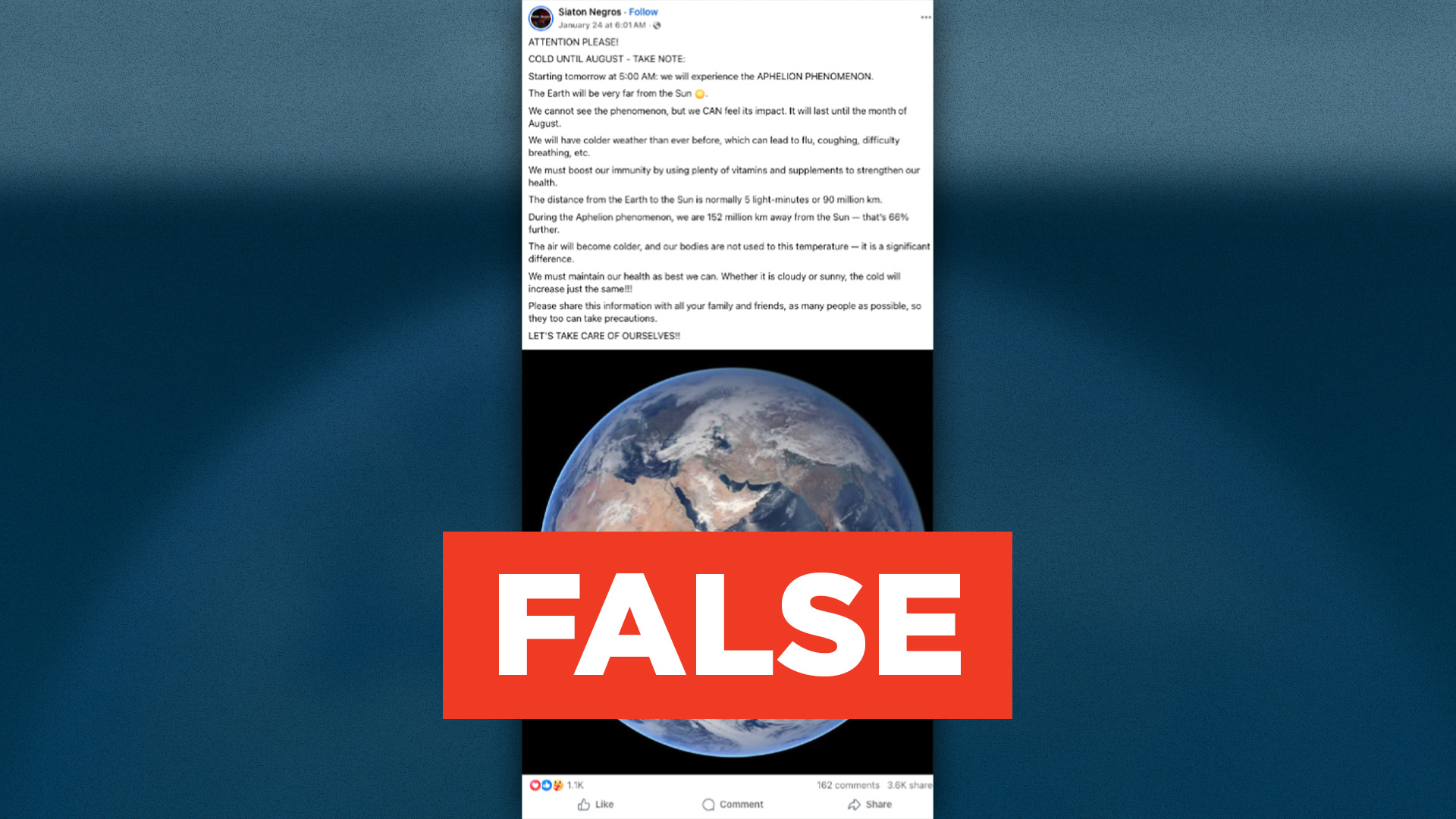
FALSE. A Facebook post claims that the aphelion phenomenon, which began in January, will bring colder-than-usual weather in the Philippines until August and increase the risk of flu or respiratory illnesses.
FACT. The Philippine Atmospheric, Geophysical and Astronomical Services Administration (PAGASA) confirmed that aphelion does not cause prolonged cold weather or pose direct health risks.
The claim circulated on social media, including pages like “Siaton Negros,” suggesting that Earth’s increased distance from the sun would make the Philippines colder and more prone to illnesses. This is astronomically and medically incorrect.
Cool weather in January in the Philippines is caused by the northeast monsoon (amihan), not aphelion. PAGASA reported minimum temperatures of 19.2°C in Quezon City on January 29, attributing the cool air to the seasonal wind system from East Asia.
Health-wise, colds and flu are caused by viruses, not cold weather. While cooler conditions may slightly increase virus transmission because people stay indoors more, it is not directly caused by aphelion. Experts from Johns Hopkins Medicine and Doctor Anywhere Philippines confirm this.