


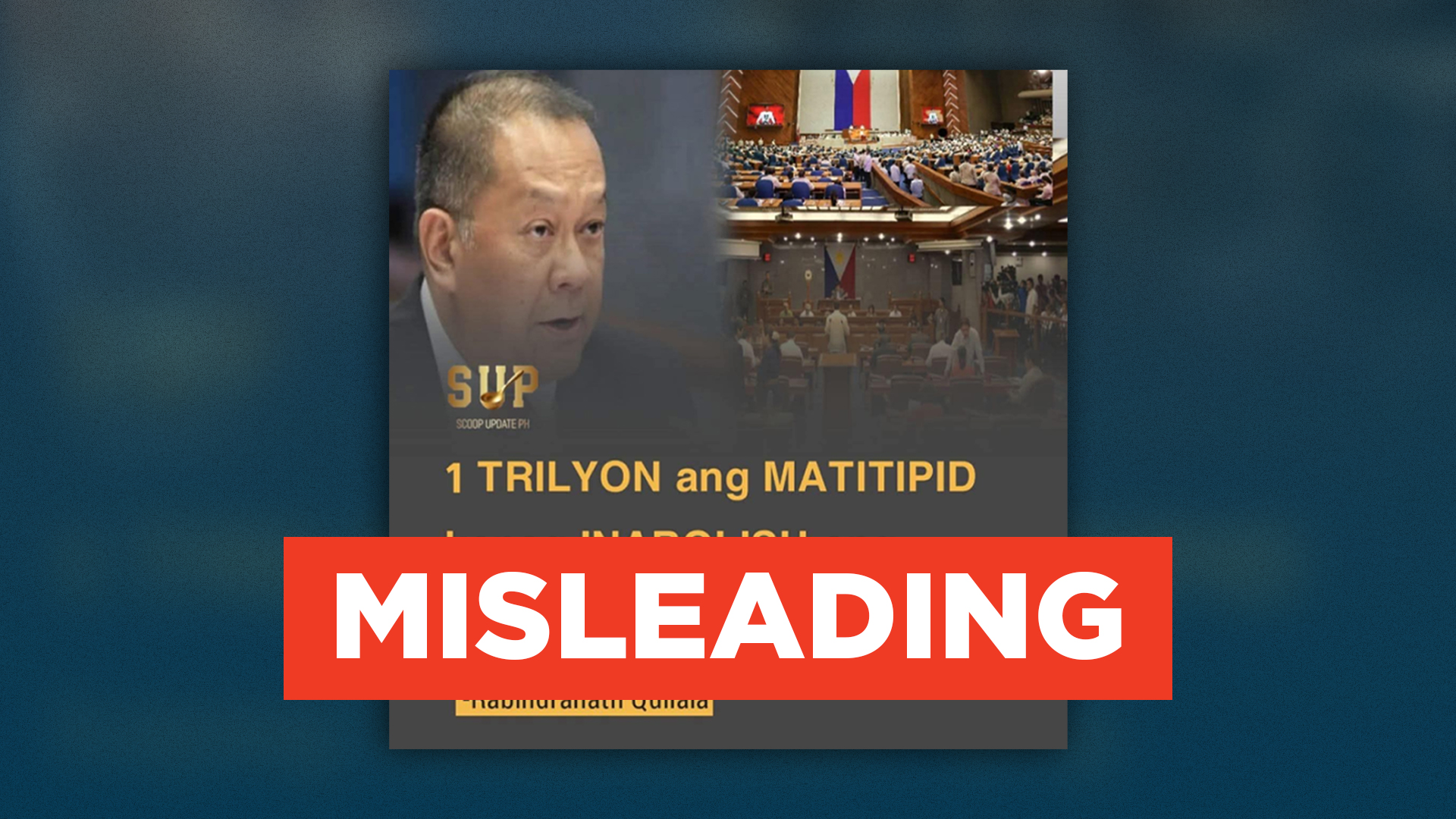
MISLEADING. Abolishing the Senate and Congress will save P1 trillion from the Philippines’ national budget.
FACT. There are no statements or social media posts that demonstrate abolishing would automatically result in P1 trillion in savings.
The post attributes the P1 trillion savings claim to Rabindranath Quilala, but provides no official source, computation, or fiscal breakdown to explain how the figure was derived. No government agency, budget office, or independent fiscal expert has confirmed or endorsed this estimate.
The claim is also misleading in how it describes the structure of the legislature. It suggests abolishing both the Senate and Congress as if they were separate bodies, even though Congress already consists of two chambers: the upper chamber, the Senate, and the lower chamber, the House of Representatives.
On the other hand, abolishing Congress is not a simple institutional change that produces an immediate and fixed amount of savings. Proposals to alter the country’s system of government, such as shifting to a unicameral legislature, require complex legal, fiscal, and constitutional processes.
Official budget documents and government spending reports do not include any projected savings from abolishing legislative bodies. While discussions on “rightsizing” government personnel or reducing program redundancies exist, particularly in 2025, these are separate reform measures involving much smaller potential savings and do not support a claim of P1 trillion in budget reduction.