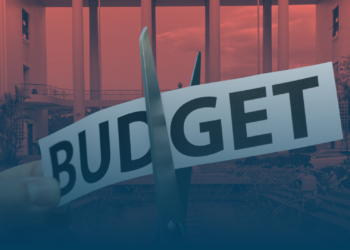


The Philippine government is taking a major step toward greater transparency and accountability in public finance by integrating blockchain technology into the 2026 General Appropriations Act (GAA).
Department of Information and Communications Technology (DICT) Secretary Henry Aguda announced that the national budget for 2026 will be recorded on a blockchain-based system, making the Philippines the first country in the world to apply blockchain technology to its entire national budget.
The initiative aims to create a clear and tamper-proof record of public spending and reduce opportunities for misuse of government funds.
The project, called the “Digital Bayanihan Chain,” digitizes the full budget cycle from congressional approval and fund release to actual disbursement, expenditure, and reporting.
Once implemented, every transaction tied to the national budget will be recorded on a shared digital ledger that cannot be altered without detection.
The initiative traces its roots to legislative efforts in 2025, when Senate Bill No. 1330, also known as “Blockchain the Budget,” was introduced by Senator Bam Aquino. The proposal sought to place the national budget and all related financial transactions on a single blockchain platform to improve transparency and oversight.
What is Blockchain?
Blockchain technology functions as a decentralized and distributed database, often described as a shared digital ledger.
Unlike traditional databases controlled by a single authority, blockchain records information across a network of computers. Transactions are then grouped into “blocks,” which are then linked together in chronological order, forming a continuous chain.
Each block is secured using cryptographic hash functions, making the data extremely difficult to modify without altering every subsequent block.
In practical terms, blockchain can be compared to a spreadsheet that is shared across many users. The key difference lies in how information is validated and secured.
Once a block of data is completed, it is assigned a unique digital fingerprint, or block header hash, and connected to the next block. Because multiple copies of the ledger exist across different machines, any attempt to change the data would be immediately visible to the network.
Push for transparency
Government officials believe the technology can help address long-standing issues in public fund management, including delayed or abandoned projects, lack of transparency with budget allocations, and the controversial use of confidential and intelligence funds.
By placing budget data on a public and verifiable system, auditors and oversight bodies can more easily monitor where money goes and how it is spent.
Advocates say the system could lead to clearer budget planning, improved monitoring of government programs, and more responsible use of public funds.
Public access to budget records may also strengthen citizen participation and trust in government institutions by allowing taxpayers to see how their contributions are used.
While full implementation will require strong cybersecurity measures, inter-agency coordination, and public education, officials view the move as a significant digital leap.
If successful, the Philippines’ “Budget on Blockchain” initiative could serve as a model for other countries seeking to modernize public finance systems through technology.