


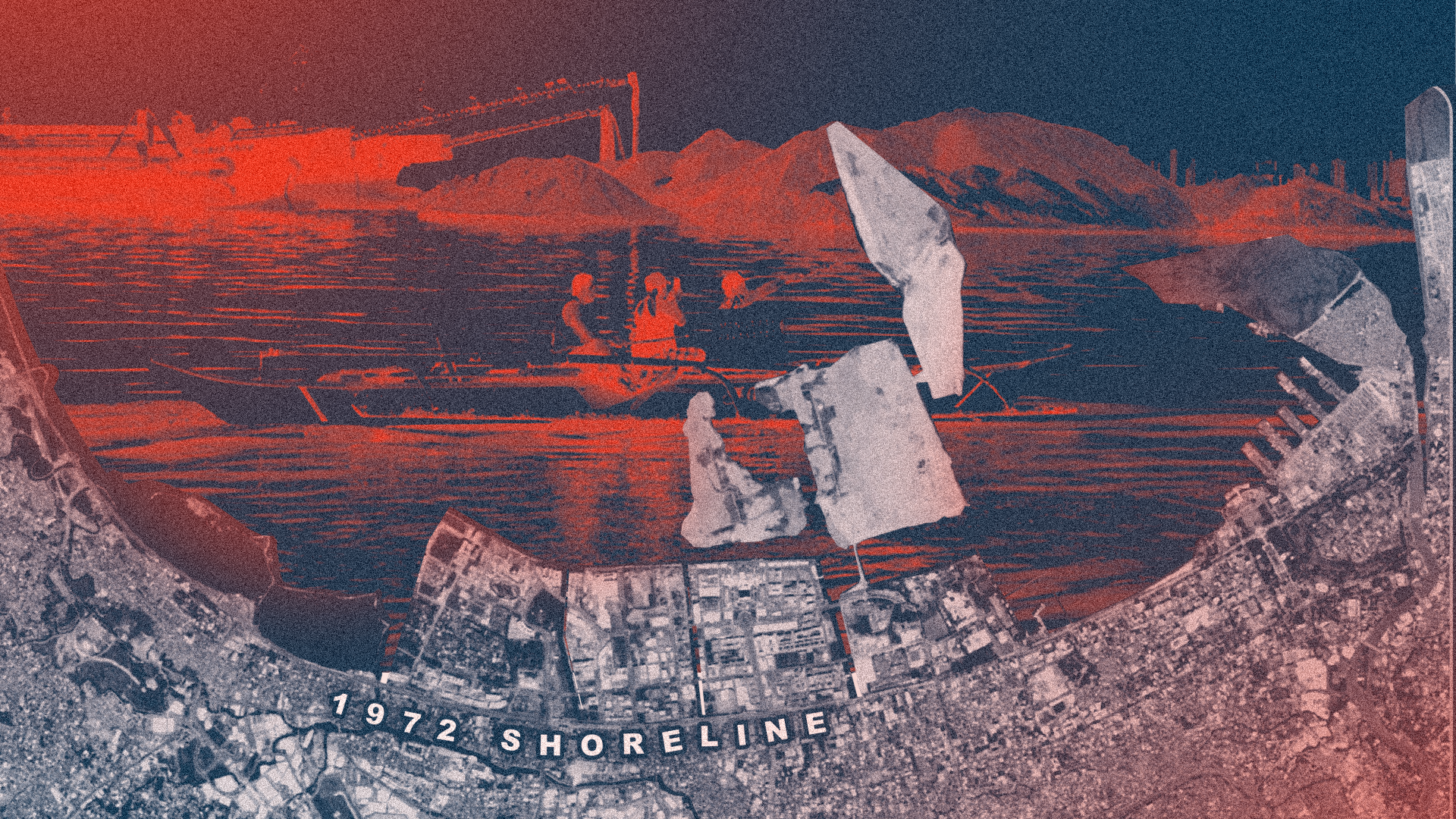
Metro Manila is not just growing upward with new high-rises, but is also expanding via coastline through decades of land reclamation that continue to alter the face of Manila Bay.
Land reclamation refers to the process of creating new land from bodies of water by filling coastal or marine areas with soil, sand, or other materials.
According to the Philippine Reclamation Authority (PRA), reclaimed land is typically used for commercial districts, ports, airports, housing developments, and major urban infrastructure.
Nothing new for Metro Manila
In Metro Manila, reclamation is far from new. The practice dates back to the early 20th century during the American colonial period, when major reclamation projects pushed Manila’s original shoreline farther west. Historical accounts note that these efforts buried parts of the old city walls and transformed the moat surrounding Fort Santiago into what later became a golf course.
Today, many of Metro Manila’s most recognizable landmarks stand on reclaimed ground.
The SM Mall of Asia complex sits within the 60-hectare SM Central Business Park in Pasay, an area built on land reclaimed from Manila Bay. Nearby developments in Bay City, including the SM By the Bay Esplanade, are also located on reclaimed shoreline.
The Port of Manila, covering about 137.5 hectares and encompassing North Harbor, South Harbor, and the Manila International Container Terminal, is likewise built on reclaimed land.
As of January 13, 2026, reclamation in Manila Bay is still ongoing, where several large-scale projects remain under development.
Among them is SM Prime’s 360-hectare reclamation project in Pasay, which directly connects to the existing Mall of Asia complex. Other active projects include developments in Navotas Coastal Bay, Horizon Manila, and the New Manila International Airport, based on project environmental impact assessments and industry reports.
Proponents of reclamation argue that these projects offer solutions to urban congestion and land scarcity.
‘Benefits’ of reclamation
The PRA lists several potential benefits, including the creation of satellite areas to support nearby urban centers, new spaces for economic and social activities, and additional land for housing and employment.
Reclaimed areas, according to the agency, can also be designed to help protect coastal zones from the effects of climate change, such as storm surges and rising sea levels.
By increasing the amount of usable land, reclamation projects are often positioned as tools to support population growth and industrial expansion in one of the country’s most densely populated regions.
Environmental and ecological drawbacks
However, environmental groups and marine scientists have repeatedly raised concerns about the ecological costs of reclamation.
These projects often involve dredging and filling activities that disrupt marine habitats and coastal ecosystems. In a 2021 case cited by environmental news site Mongabay, experts warned that the proposed Dumaguete “smart city” reclamation, which would have covered about 85 percent of the city’s shoreline, could result in a “monumental ecological disaster.”
In a joint statement, marine scientists Annadel Cabanban and Aileen Maypa cautioned that reclamation projects can lead to the degradation or complete elimination of mangrove forests, seagrass beds, and coral reefs.
Such damage, they said, could result in the local loss of hundreds to thousands of fish and other marine species that depend on these ecosystems.
As Manila Bay continues to change shape, the debate over reclamation remains unresolved. Supporters point to economic growth and urban development, while critics warn of long-term environmental consequences.
What is clear is that Metro Manila’s shoreline today looks very different from what it was originally decades ago, and it is likely to keep changing in the years ahead.