


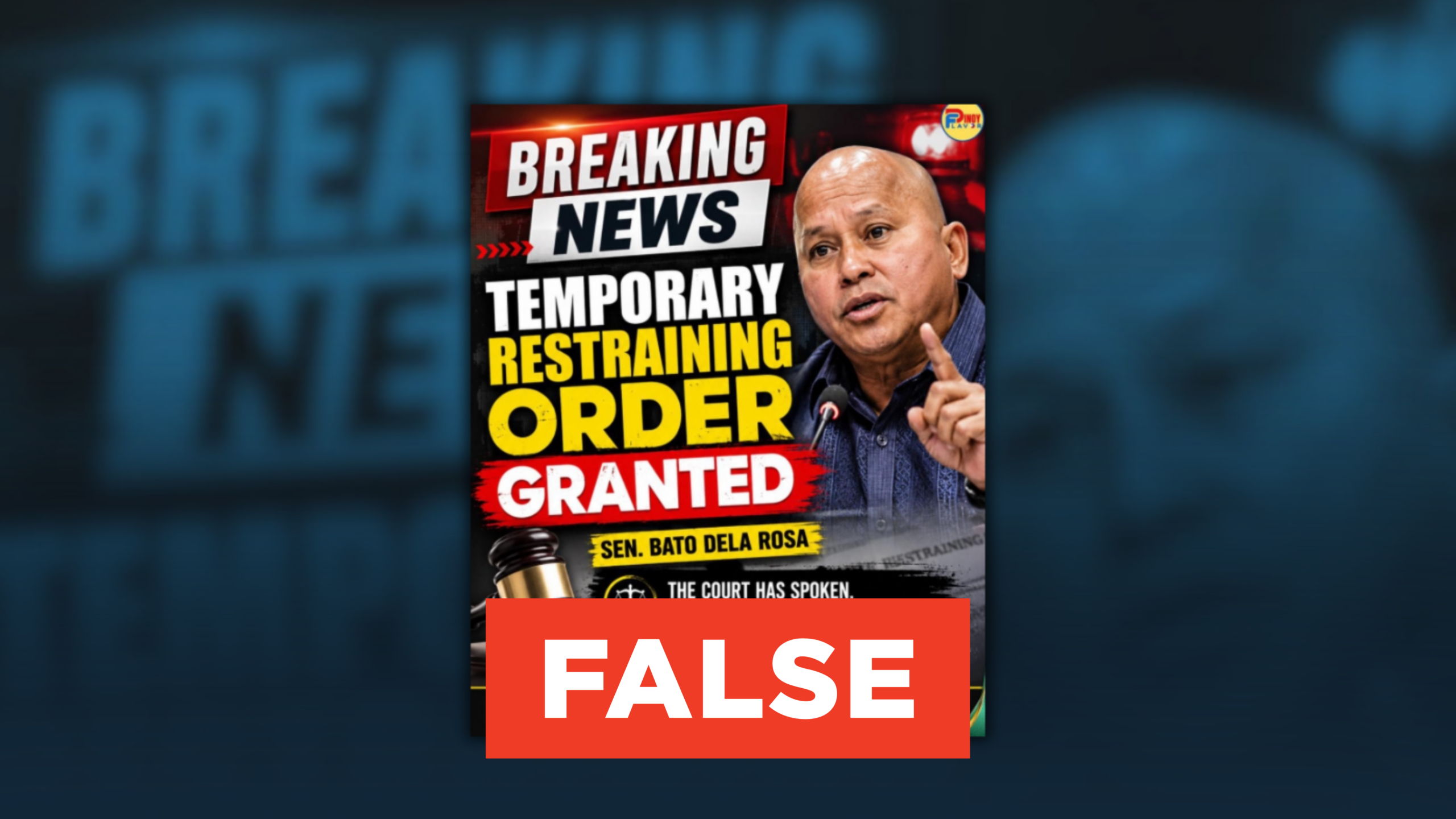
The Supreme Court rejected the petition of Senator Ronald “Bato” Dela Rosa for the issuance of a Temporary Restraining Order or Status Quo Ante Order which would prevent his arrest, detention, transfer, or surrender pursuant to any warrant issued by the International Criminal Court or Interpol, or through any other process initiated abroad, without first securing a judicial warrant issued within the Philippines. The case was decided on May 20, 2026, regarding G.R. No. 278747.
As ruled by the Supreme Court, the primary question here was not whether the ICC warrant was legal from the outset, but whether Dela Rosa was entitled to seek refuge on a temporary basis while the principal petition is pending. It also ruled that it should refrain from deciding on points that would prejudice constitutional questions in the principal petition.
In explaining its ruling, the Supreme Court noted that the issuance of a TRO can only occur where “there is a clear and indisputable right to be protected from invasion, a material invasion of such right, a pressing necessity for protecting the same against irreparable injury, and the absence of any other speedy and adequate remedy.”
Another ground why Dela Rosa was denied a TRO is that he did not have any clear-cut right, or “right in esse,” which would enable him to obtain such a temporary restraining order. According to the SC, the right alleged by Dela Rosa to prevent his arrest was subject to further determination since there were still legal questions to be answered, such as whether the ICC warrant was enforceable even after the withdrawal of the Philippines from the Rome Statute and whether there should be a warrant issued by Philippine courts first.
Furthermore, the Court held that there is no material or substantial infringement of Dela Rosa’s rights. This is because he was already in protective custody of the Senate and thus, the alleged execution of the ICC warrant was not possible at the time. Additionally, the SC judicially noticed the pronouncement made by President Ferdinand Marcos, Jr. stating that he did not give an order for Dela Rosa’s arrest.
A third consideration was the lack of imminent irreparable injury. The Supreme Court held that mere possibilities of injury cannot be used as bases to issue TROs if there is no concrete and established right being protected. In effect, because the Court had concluded that there was no clear right that needed protection, it also concluded that there was no imminent irreparable injury.
In a third caveat, the Court said that a premature decision might be made on the merits of the main issue if the TRO were to be issued. The Court said that it would be better not to render a premature decision of the controversy on the basis of an interim measure like the TRO.
The SC further explained that among the elements constituting the urgent manifestation of Dela Rosa were some unverified reports, interviews, video declarations, and accusations. Given that the Supreme Court is not the one who determines the truth of the matter, it cannot make a ruling based on mere speculations or issues that need to be resolved.
It must also be noted, however, that the denial of the TRO did not automatically mean that the Supreme Court already rendered a decision concerning Dela Rosa’s culpability and legality of the enforcement of the ICC arrest warrant in the country. Reuters reported that according to Dela Rosa’s attorneys, the decision was not yet a final ruling on the issues raised.