

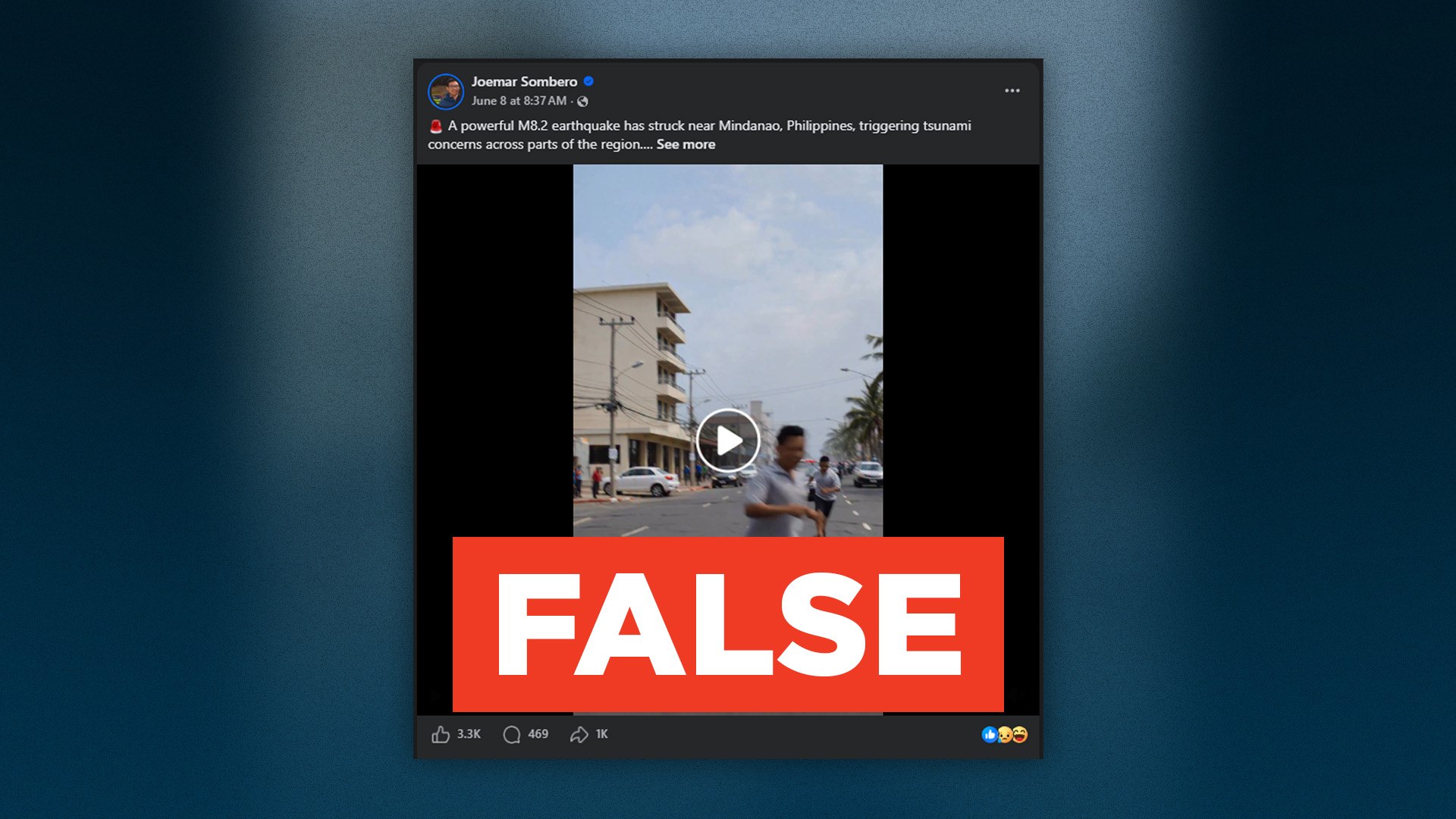
A video circulating on Facebook and being shared as footage of the destruction caused by the June 8 Mindanao earthquake does not show actual scenes from the disaster. The video, which features collapsed buildings, damaged infrastructure, and dramatic depictions of widespread devastation, has gained attention online as users search for information and updates following the powerful earthquake that struck off the coast of Mindanao.
The footage originated from a post by Joemar Sombero and has since been reposted by other users who presented it as authentic documentation of the earthquake’s aftermath. Because the visuals resemble scenes commonly associated with major natural disasters, viewers may easily mistake the content for genuine footage captured in affected communities. However, there is no evidence that the scenes shown in the video were recorded during or after the earthquake, nor is there proof linking the footage to any of the areas impacted by the disaster.
Instead, the video was identified by its creator as an AI-generated “cinematic recreation.” This means the scenes were artificially produced using generative artificial intelligence tools rather than captured by a camera on the ground. Advances in AI technology have made it increasingly possible to generate realistic-looking videos that imitate real-life events, often making it difficult for viewers to distinguish between authentic footage and digitally created content without additional context or verification.
Presenting AI-generated content as real disaster footage can be misleading, particularly during emergencies when the public relies on accurate information to understand the scale of an event and the conditions faced by affected communities. While the video may appear convincing at first glance, its classification as an AI-generated recreation means it should not be treated as documentary evidence of the earthquake’s impact.
The earthquake itself, however, was a real and destructive event. A magnitude 7.8 earthquake struck off the coast of Mindanao on June 8, triggering tsunami warnings and prompting emergency response operations across several areas. Authorities reported casualties, injuries, landslides, and structural damage as rescue teams and local governments worked to assist affected residents and assess the extent of the destruction.
Major disasters often create conditions in which misleading content can spread rapidly online, including recycled footage, edited videos, and AI-generated imagery falsely presented as authentic documentation. For this reason, the public is encouraged to verify disaster-related claims through official government agencies, disaster-monitoring institutions, and credible news organizations before sharing content that may contribute to confusion or misinformation.