

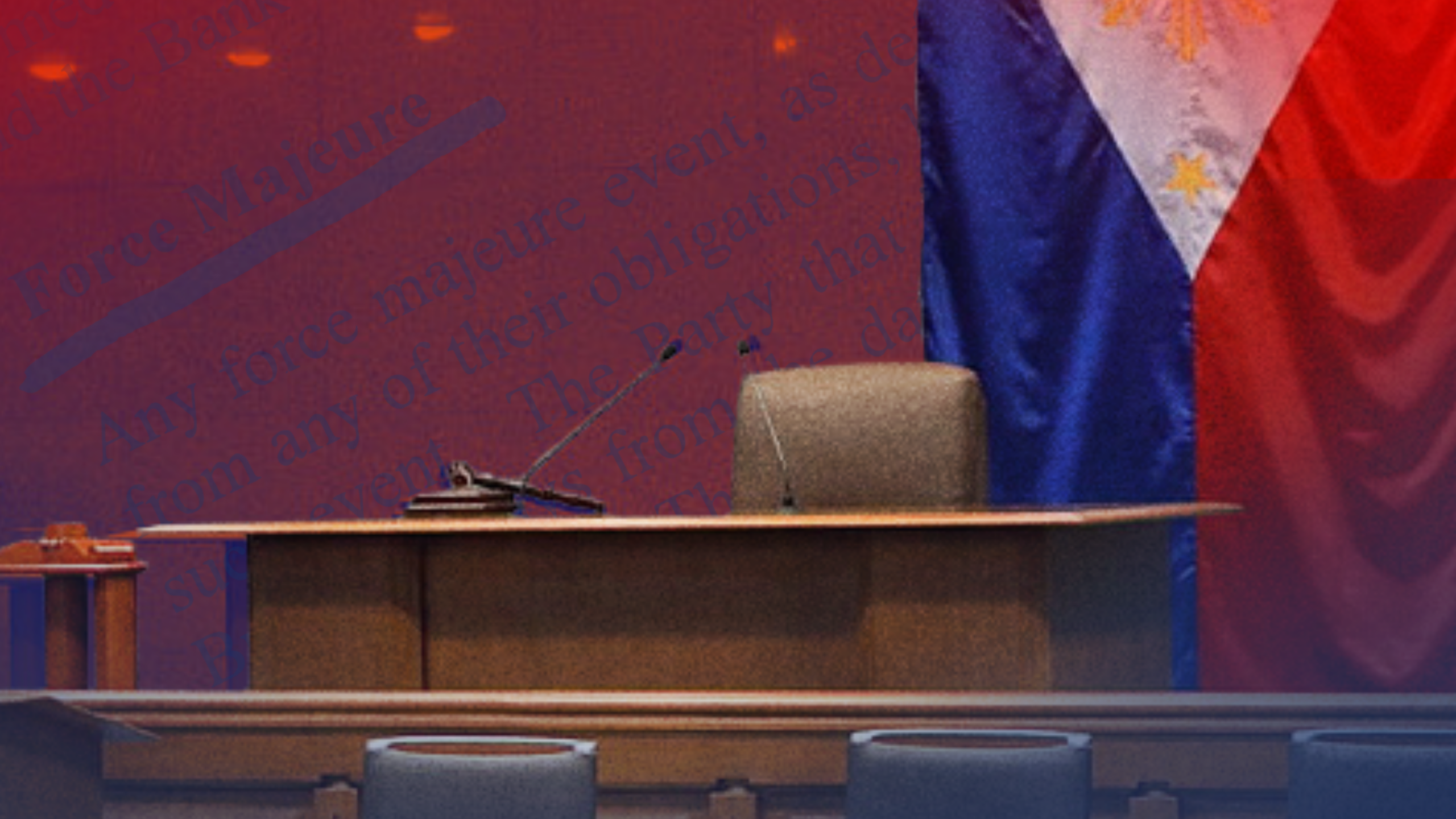
The debate over “force majeure” ignited when Senator Robinhood Padilla raised the issue during a Senate plenary session on May 28.
The conflict emerged when the majority bloc sought to modify Senate rules to permit lawmakers to join sessions and cast votes remotely through videoconferencing for any valid reason.
To justify the amendment’s urgency, Senator Padilla asserted that the Philippines is already facing force majeure, pointing to Middle East tensions, the China-Taiwan geopolitical dispute, and severe weather risks from El Niño and La Niña.
This French term translates to “superior force,” describing acts of God or situations beyond human control. Under Philippine law, particularly Article 1174 of the Civil Code, force majeure refers to a fortuitous event or act of God that is entirely unforeseen or unavoidable.
The Supreme Court states this defense applies only when the event was unavoidable, beyond human control, and made compliance absolutely impossible, while merely difficult or costly does not qualify.
Senator Padilla’s assertions are legally flawed because distant international conflicts and predicted weather patterns do not physically stop Philippine lawmakers from attending sessions in Pasay City.
Opposing senators rapidly challenged his claims, pointing out that the real reason for the sudden push for remote attendance provisions was to accommodate Senator Ronald “Bato” Dela Rosa, who had skipped physical sessions to avoid an impending International Criminal Court arrest warrant.
Allowing a broad and incorrect use of force majeure could create a dangerous precedent in Philippine law and governance.
If distant wars or predictable weather conditions were accepted as excuses, people could easily avoid their legal responsibilities and obligations. Ultimately, diluting the strict legal requirement of Article 1174 would seriously disrupt commercial stability, since businesses could routinely breach contracts by blaming external global events that genuinely do not prevent them from fulfilling their obligations.