


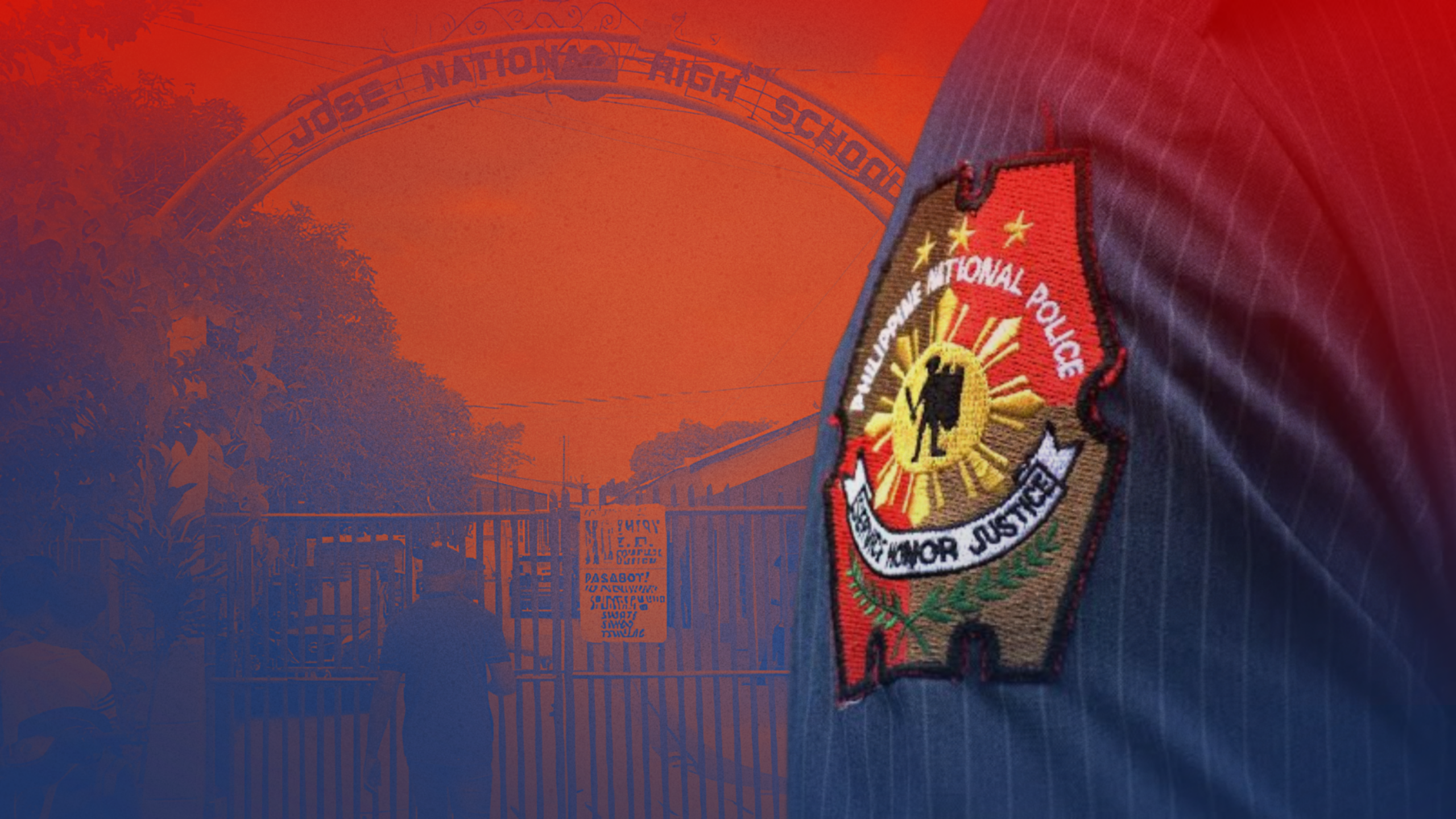
The Philippine National Police (PNP) has placed a police officer under restrictive custody after investigators linked one of the firearms used in the deadly shooting at San Jose National High School in Tacloban City to her.
The measure came after the June 22, 2026 shooting that left three students dead and 20 others wounded and injured. Investigators traced one of the two firearms recovered a 9mm Glock pistol to a policewoman identified as the aunt of the 14-year-old suspect. According to Police Regional Office 8 spokesperson Lt. Col. Analiza Armeza, the officer has been placed under restrictive custody while authorities investigate how the firearm ended up in the teenager’s possession.
What does being put under “restrictive custody” really mean?
Restrictive custody is a preventive measure imposed on police personnel facing serious administrative or criminal cases. Rather than serving as a form of punishment, it allows the PNP to closely monitor an officer while an investigation is ongoing.
Under National Police Commission (NAPOLCOM) rules, restrictive custody applies to personnel facing a grave administrative offense or a criminal complaint involving a grave offense, typically one punishable by at least six years and one day of imprisonment.
While under restrictive custody, an officer may be required to remain inside a designated police camp. Their whereabouts are continuously monitored, and every authorized movement is documented, including departure and arrival times, destinations, and escort details. If they are permitted to leave the camp, they must be accompanied by a one-on-one escort. They are also required to surrender their issued service firearm while the restriction remains in effect.
There is no fixed duration for restrictive custody. The measure generally remains in force until the administrative or criminal case is resolved, or until authorities determine that the reasons for imposing it no longer exist.