


While around 193 sovereign states and territories have updated their legal systems to allow divorce, the Philippines continues to provide annulment as the primary legal remedy for ending a marriage.
At present, only the Philippines and Vatican City do not have a divorce law. This situation reflects the country’s historical and cultural influences, including the longstanding role of the Catholic Church in shaping views on the permanence of marriage.
Despite this, data from the 2022 National Demographic and Health Survey reveals that nearly 1 in 5 Filipino women aged 15-49 have experienced physical, sexual, or emotional violence from an intimate partner.
The role of Catholic mandate
The absence of divorce in the Philippines is primarily a product of the Roman Catholic Church’s profound influence on the country’s legislative and social architecture. With roughly 79% of the population identifying as Catholic, the Church utilizes its vast moral authority to lobby against any measure that threatens the “sanctity of the family” as defined by canon law.
This influences policy-governing individuals in the country, as a study indicates many legislators fear direct confrontation with the Catholic Bishops’ Conference of the Philippines (CBCP).
Furthermore, the legal framework governing marriage in the Philippines is heavily derived from the 1987 Constitution, which explicitly mandates the state to protect the family as a basic social institution. Article XV, Section 2 of the 1987 Constitution explicitly mandates that “Marriage, as an inviolable social institution, is the foundation of the family and shall be protected by the State”.
Research from 2024 suggests that 57% of the adult population still leans toward traditional marital views, a sentiment frequently reinforced by Sunday sermons and religious educational systems. Also, a late 2025 SWS Survey also revealed that 43% of Filipinos still believe that trust can be rebuilt and a partnership can successfully move forward even after cheating or betrayal. A study shows that this could be anchored with the religious belief that for the predominantly Catholic Filipino population, marriage is seen as indissoluble (“for better or for worse”).
Finally, the current alternative of annulment is designed to align with Catholic principles by declaring a marriage void from its inception rather than dissolving a valid one. Based on 2025 legal estimates, annulment costs can range from around ₱150,000 to over ₱700,000, amounts that are beyond the means of many average Filipino workers.
In 2024, more than 11,000 cases of violence against women were reported to the police, yet pursuing legal remedies such as annulment remains financially challenging for many individuals.
Institutional Political Resistance
Reports indicate that several high-ranking public officials continue to block floor deliberations, citing personal religious convictions or the perceived lack of a “public mandate” from their conservative base.
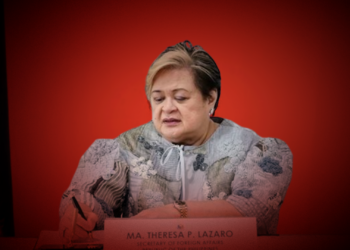
House Bill No. 9349 or Absolute Divorce Act, authored by Representative Edcel Lagman passed its third reading in the House of Representatives in May 2024. As of early 2026, the bill is currently pending in the Senate, where it must be refiled or deliberated upon following the transition to the 20th Congress to move toward becoming law.
It remains stalled primarily due to strong opposition from the Catholic Church and conservative lawmakers. Senator Cynthia Villar expressed opposition from the passing of the bill, citing her personal familial status as her reason. “Pero ako po, alam naman ng lahat I have a very happy family life, so I’m not in favor of divorce,” Villar stated. Moreover, the executive branch under the current administration has shown inconsistent support, often leaving the Divorce Bill off the list of priority legislative measures. Even current annulment cases can take up to four years to conclude, yet no significant policy shift has been made to expedite these processes.
Structural and Legal Conservatism
The Philippine legal system is characterized by a structural conservatism that treats marriage as an “inviolable social institution” rather than a civil contract. By 2026, the Philippines has become a global outlier, as even other traditionally Catholic nations like Ireland and Malta have long since recognized the necessity of divorce for civil liberty.
Statistics from 2023 and 2024 show that the number of annulment petitions filed continues to grow by nearly 10% annually, yet the success rate remains low due to the stringent burden of proof Cultural conservatism further reinforces these legal barriers, as societal stigma often blames women for the failure of their marriages. Even current annulment cases can take up to four years to conclude, yet no significant policy shift has been made to expedite these processes.
The Philippine Commission on Women notes that psychological and economic abuse are the most common forms of violence, yet these are rarely sufficient grounds for a civil annulment. This creates a cycle of poverty and trauma, as women who cannot legally divorce are often unable to secure financial support or legally move on with their lives.